
Ahmedabad, one of India’s most dynamic cities, is rapidly
evolving into a modern urban hub, driven by significant
advancements in physical infrastructure and real estate
development. This growth is a direct result of strategic
investments and well-planned initiatives that cater to the
demands of enterprises and a growing labor force.
Residential Development: Meeting Growing Demand
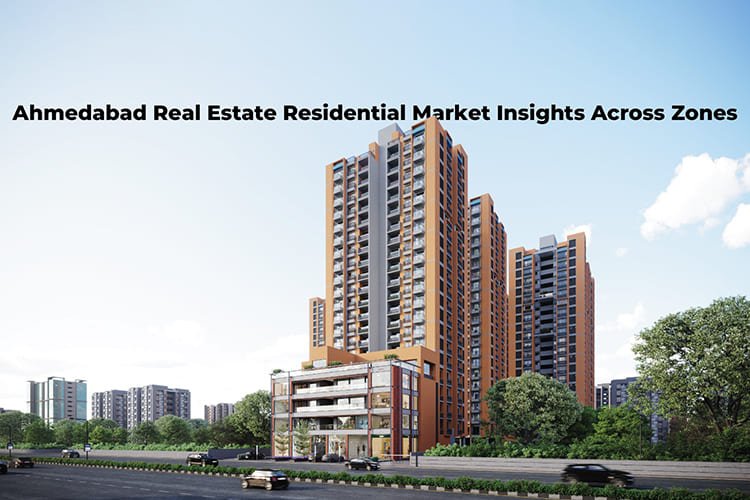
Ahmedabad's residential real estate market is thriving, with
substantial developments within the city and its outskirts
to accommodate the increasing population. Driven primarily
by end-users, the city’s housing market has emerged as one
of the most promising among major cities in India, supported
by economic and infrastructure growth.
Key Infrastructure Developments
Sardar Vallabhbhai Patel International Airport
Ahmedabad boasts a well-connected international airport,
facilitating seamless travel for both business and leisure.
Metro Rail Network Expansion
The metro rail network in Ahmedabad is transforming urban
mobility.
• Operational Network: 40.03 km currently
operational.
• Phase II Expansion: Adding 28.2 km across
two corridors:
o Corridor 1:
Motera Stadium to Mahatma Mandir (22.8 km).
o Corridor 2:
GNLU to GIFT City in Gandhinagar (5.4 km).
Sabarmati Multimodal Transport Hub
This state-of-the-art hub, developed by the National
High-Speed Rail Corporation Limited (NHSRCL), integrates
high-speed rail with Indian Railways. The G+7 and G+9
twin-structure design underscores its architectural and
functional excellence.
Ahmedabad Thread Expressway
A Greenfield project under the Bharatmala Project, this
213.8 km expressway will enhance connectivity with a 6/8
lane infrastructure, developed at an estimated cost of
₹6,000 crore.
Strategic Economic Projects
Dholera Special Investment Region (DSIR)
A visionary global hub spanning 9,225 hectares, DSIR is set
to employ approximately 800,000 people by 2040. It is poised
to become a center of economic activity.
Mumbai-Ahmedabad High-Speed Rail
India’s first high-speed rail project, expected to be
completed in phases by 2027, will reduce travel time between
Mumbai and Ahmedabad to just 2 hours, revolutionizing
inter-city connectivity.
Delhi-Mumbai Industrial Corridor (DMIC)
Covering 62% of Gujarat, this corridor connects key areas
such as Ahmedabad, Dholera, and Bhavnagar, fostering
industrial growth and economic development.
Sports and Leisure
Sardar Patel Sports Enclave
Designed to be one of India’s largest sports complexes, this
project aims to host future international events, including
the Summer Olympics, adding a new dimension to Ahmedabad’s
global appeal.
Conclusion
Ahmedabad’s ongoing infrastructure projects highlight its
commitment to modernization and sustainability. From
improved urban mobility to global-standard industrial hubs,
the city is shaping itself into a destination of choice for
businesses, residents, and investors alike.